Your Cart is Empty



IMPORTANT ANNOUNCEMENT:due to carrier delays we cannot schedule live animal shipments between 11/20 - 12/5 and 12/18 - 1/5.Learn Why
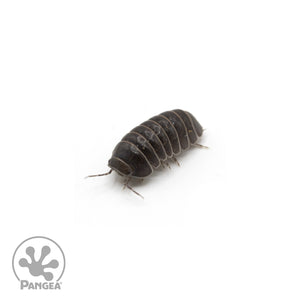
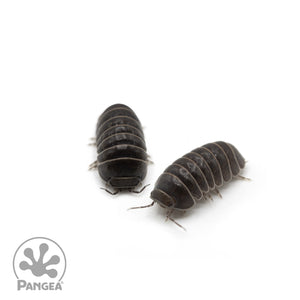
Armadillo officinalis 'Spanish Pill Bug' Isopods
• Native to Mediterranean region and western Black Sea coasts
• This line specifically derives from species collected in Spain
• Temperature Range: 68–78º F (20–25.5°C)
• Humidity Preference: Low to Medium (50-70%)
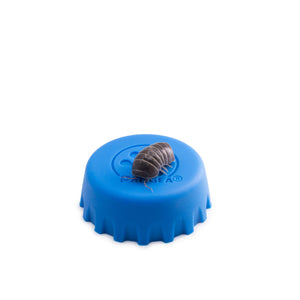
• Average Adult Size: 1.8 cm (~0.71")
• Medium-sized isopod with the ability to fully conglobate (roll into a tight ball)
• Sturdy, glossy shell with characteristic pill-bug shape
• Soft or rotting wood
• Leaf litter and decaying plant matter
• Calcium sources (e.g., cuttlebone, eggshell, PangeaCal Calcium)
• Protein (e.g., freeze-dried shrimp, minnows, fish pellets, dried insects)
• Commercial insect food (e.g., Pangea Roach & Cricket Food)
• Vegetables (e.g., carrots, zucchini, sweet potatoes, pumpkin, cucumber)
• Fruits (e.g., bananas, apples, watermelon, mango)
Armadillo officinalis, often called the “Spanish Pill Bug” or “Hissing Isopod,” is best known for its unusual behavior, producing a soft hissing or rattling sound when disturbed. This “hiss” is created by the isopod rubbing its legs against the inner shell wall while curled up. It is also one of the few species that remains tightly curled long after perceived danger passes. This shy yet prolific species thrives under moderate care and is a fascinating addition to any collection due to its vocal and defensive behaviors.
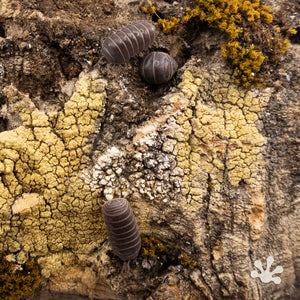
For successfully setting up a master culture setup of isopods we recommend using 6 qt - 32 qt plastic shoebox tubs. Locking tubs are optional but provide added security. Creating a series of small holes on alternating sides of the container will help to achieve healthy flow and reduce mold. Adding 1-3 inches (more for burrowing species) of pre-soaked Pangea ABG Substrate will provide a suitable substrate. Adding Pangea Sphagnum Moss, Pangea Leaf Litter Decor (the more the better), and pieces of wood or cork bark will help provide multiple layers for isopods to inhabit and feel safe. Mist culture as needed.
*Co-habitation amongst separate species of Isopod is not recommended.
*This animal can only be shipped to theContiguous US, except LA, OR, and FL because of state regulations.


